
Unity Industry Viewer Template 1.0.0
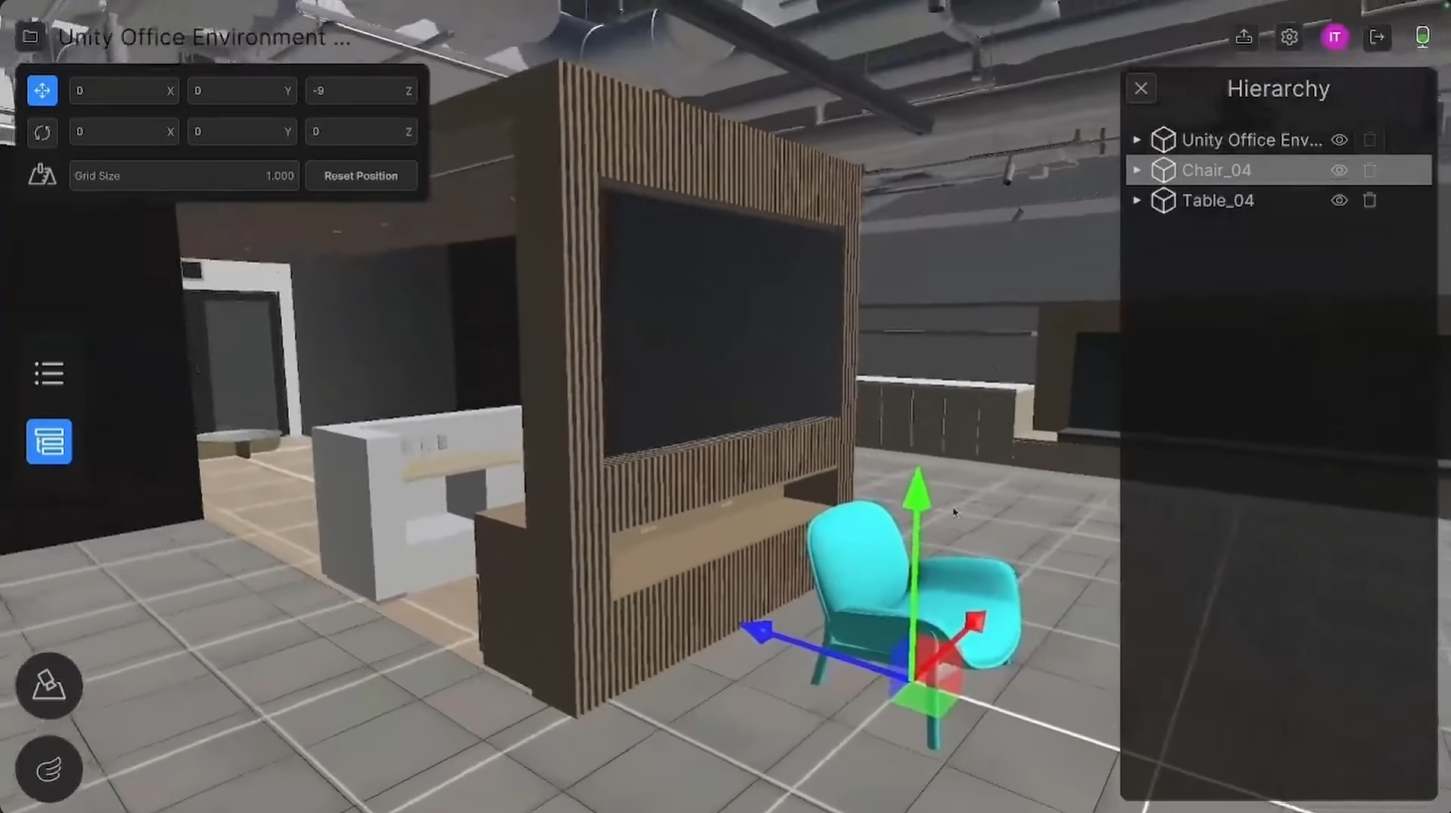
Conceptual image created for illustration only. It does not show proprietary client assets or the original project UI.
What did I do?
I worked on the first version of the Unity Industry Viewer Template. This was a public Unity template focused on viewing and interacting with industrial 3D content connected to Unity Cloud workflows.
My work included service account authorization for Unity Cloud, graphic raycasting for large streamed datasets, UI bug fixes based on client feedback, optimized front-end API request calls for CRUD operations, and fixes for UX-breaking graphical issues caused by GLTFast behavior.
Service account authorization
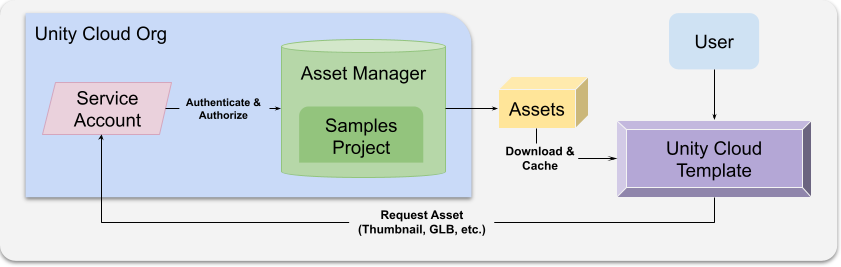
I implemented a Service Account Authorizer that allowed service account principals to authenticate to Unity Cloud and access sample data stored in Unity Cloud Assets.
This meant the template could show cloud-connected sample workflows without requiring users to log into a personal Unity account first. That made the demo flow more useful for presentations, testing, and template exploration.
Graphic raycasting for large data
I implemented the Data Streaming package graphic raycaster. The goal was to support click interactions without generating complex colliders for large datasets.
This is the kind of problem that appears often in industrial visualization. Large models or streamed datasets can be too expensive or impractical to cover with detailed colliders. But users still need to click, select, and interact with the visual content.
Using a graphic raycast approach helped avoid unnecessary collider complexity while still supporting interaction, greatly improving asset environment load times and framerate.
UI and API improvements
I implemented various UI bug fixes based on client feedback. I also optimized front-end API request calls for CRUD operations.
These changes were practical, but important. Templates need to be reliable because they are meant to be reused. If the first experience is slow, visually broken, or confusing, users will not trust the template as a base for their own project.
GLTFast-related graphical fixes
I also fixed UX-breaking graphical bugs caused by GLTFast package behavior.
In this type of project, imported 3D content is central to the experience. When rendering or import issues create strange visual behavior, the problem can look like a content issue, a Unity issue, or a template issue. Fixing those problems helps make the template feel more stable and professional.
What this project shows
Unity Cloud authentication workflows.
Service account integration.
Interaction with large streamed data.
Cloud asset sample workflows.
UI polish based on feedback.
API call optimization.
Practical fixes around runtime 3D data loading
Public references
GitHub repository: https://github.com/Unity-Technologies/unity-industry-viewer-template
Public video: https://www.youtube.com/watch?v=ncJpxREcpEc